
Introduction
By bicycle in search of ancient water mills.
The itinerary winds through the green countryside and the ancient villages of our territory, immersed in the sounds, scents and flavors of the past, linked to the waterways and the precious traditions of the mills. We hope that our guide will accompany you on this journey and increasingly encourage you to use the bicycle for new explorations. Everyone... have a good ride!
Description of the route (km 44)
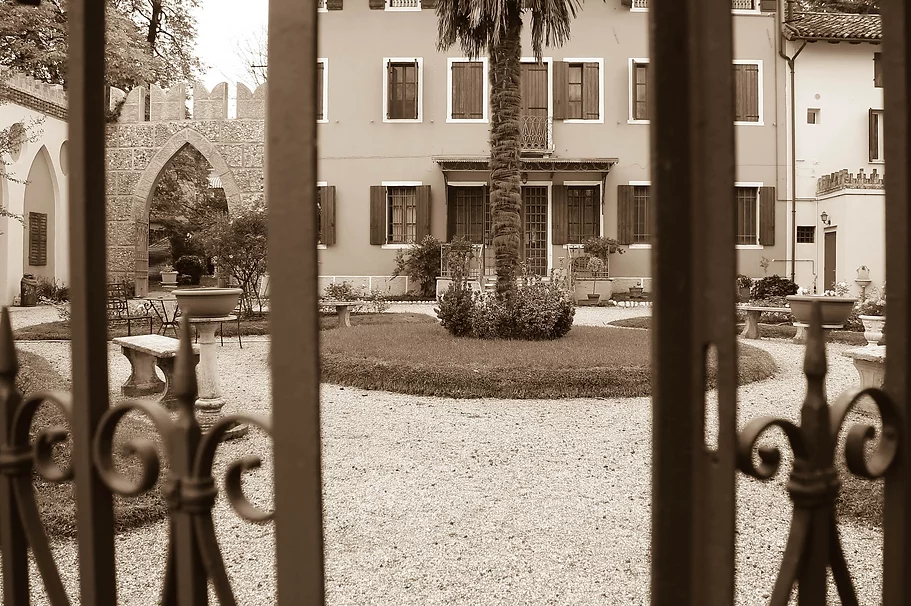
Our journey begins from Villa Bornancini in Cinto Caomaggiore. we turn left onto Via Umberto Grandis SP78 and continue on SP28 then left onto Via Julia Concordia and continue on Via Roma up to Sesto al Reghena where we will turn left towards Piazza Cardinale Barbo, from the bridge over the Reghena, we can see what remains of the < strong>Pilariso Mill.
We return to Via Roma and take Via Zanardini on the left. At the roundabout we take the 2nd exit Via Levada/SP16, after 2 km we turn left onto Via Piave and continue on Via Versiola then we turn right onto Via Teglio and after 150 meters we turn left onto SP41, at the roundabout take the 1st exit onto Via S.Lucia/SP28 and after 600 meters we turn right onto Via S.Rocco then right again onto Via Magredi and after 500 meters we will arrive at the Mill of Via Magredi.
We continue on Via Magredi then turn left onto Via Monte Santo/SP41 then right onto Via Siega after 650 meters we will find the Borgo Siega Mill.
We turn right towards Via Borgo di Sotto for 400 meters and then turn left onto Via Borgo di Sotto then left again onto Via Stalis, cross the Lemene river and turn right onto Via Venchiaredo, after 150 meters we will come across the Mulini by Stanlis.
We go back and take Via Stalis again, continue for 2 km. then we turn left onto Via Piave and after 400 meters left again onto Via Levada/SP16, after 1.5 km we will find the Mulino di Gruaro .
We continue on SP16 and at the roundabout take the 2nd exit onto Via Sant'Angelo then we keep left onto Via Boldara, after 1.5 km we follow the Lemene river for 500 meters then continue straight on Via Trieste for 50 metres, we cross the Lemene river and on our right we will find the Boldara Mill.
We continue for 50 meters on Via Trieste, then we turn hard right and follow the road for 1.2 km. At the end of the road we continue on Via Cave for 180 meters and then right on Via Gervino after another 180 meters we turn right on Limited traffic road, let's go along it and we will find the Mills of Villa Bombarda.
We go back and turn right onto Via Gervino and after 70 meters left onto Via Bertaldo, after passing the A4, we turn right onto Via Ponte di Covra and after 600 meters right again along the SP463 until we reach Via S.Martino on our right , after 400 meters we turn left onto Via Solferino, after 250 meters we turn right onto Via A.Enno then we turn left onto Viale Pordenone, after 160 meters turn left then the first right and continue along Viale della Stazione, a once we reach the Lemene river we turn left and then right onto Borgo S.Nicolò, after 200 meters we turn left onto Via Abbazia and then right onto Corso Martiri della Libertà, after 200 meters we turn right onto Vicolo del Duomo, we cross the bridge of Sant'Andrea and turn left, we will find the Mulini di Sant'Andrea.
We turn right onto the Archaeological Route along the Lemene and then turn left onto Via Seminario, take the first street on the right and after 30 meters we turn right towards Piazza Castello then the first street on the left entering the Parco della Pace, after 80 meters we turn to the right and continue straight until Piazza Castello, cross the Lemene river and immediately turn right, take the first street on the left and follow it backwards until Viale Pordenone then turn left and follow Via Cristoforo Colombo to the right, follow it for 1 .5 km until you find Viale Treviso.
At the roundabout take the fourth exit onto Via Masata, follow it for 900 meters and then turn right onto Via Montecassino, continue on Via Franca and at the roundabout take the second exit to stay on Via Franca and then Via Fornace, at the next roundabout take the second exit onto Via Caserate and after 50 meters right onto Via Staimbek, follow it for 1.4 km. then turn left onto Via S.Biagio/Via della Pietra, at the end we turn right onto Via Lison and after 650 meters left onto Via Belfiore, after a few meters we will find the Belfiore Mill. The visit to the Ethnographic Museum of the Belfiore Mill is interesting.
We go back along Via Belfiore, Via Lison and Via Della Pietra following it until the crossroads where we will turn right towards Via S.Biagio which we will follow until the crossroads where we will turn right onto Via S.Biagio/Via Comugne, after 1 km we will turn left on Via Mezzatorre D'Alvea continuing on Via Venezia and then turning right onto Via Bandida, after 250 meters we turn left onto Via della Rota and continue on Via Banduzzo, after 600 meters we turn right onto Via Bravin and after 450 meters on the left on Via Reghena and then follow right onto Via Portogruaro/SR251, after 300 meters we will find the Mulino di La Sega on our right.
We continue on Via Portogruaro/SR251 for 50 meters and then before the Lemene river we turn left, we follow the road that runs alongside the river for 2.8 km and then turn left onto SP28, we continue on Via Umberto Grandis/SP78 up to Cinto Caomaggiore.
Pila-Riso mill - Sesto al Reghena
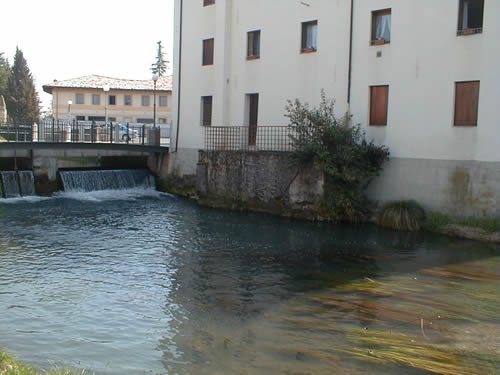 The building known as Pila-riso is located in the historic center of Sesto al Reghena. Today it replaces the ancient mill where the rice was "piled", that is, it was treated with particular procedures that involved the use of energy derived from the Reghena river. The mill appears in the Napoleonic Land Registry and can be traced back to 1700. Nowadays the building can no longer be visited inside as, following a conservative restoration, it houses private homes.
A short detour, following the signs, leads to the beautiful route known as the Burovich meadows, in a particular and intact natural environment.
Mill in Via Magredi - Bagnarola
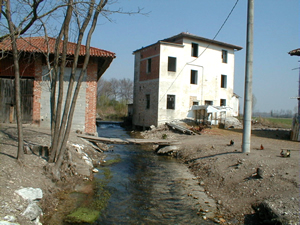 The mill is located at the branch point of the 'Versa' with the 'Marinùt' stream. It was managed by the Rumiel family for about eighty years.
This mill was equipped with cylinders and rolling mills for grinding corn, wheat, barley and oats. The driving force of the entire production process came from water, with a traditional system consisting of a barrier with gates in the river, wheels with blades and a large transmission shaft that penetrated inside the mill, setting pulleys in motion, transmission belts and machinery. After 1960, with the transformation of the peasant economy, small milling activities went into decline. The Rumiel property passed to the Biason family who closed its doors definitively in 1987.
It was the last mill in Bagnarola.
Mill of Borgo Siega - Bagnarola
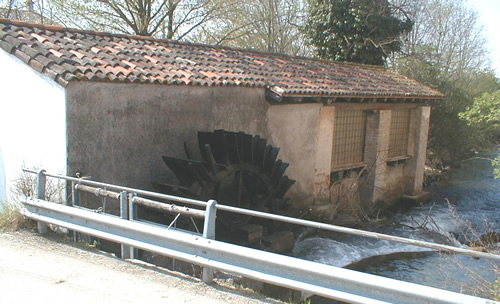 It is located in Bagnarola in the Borgo Siega area, on the Versa canal which after the "leap" of the water flows into the Lemene.
Its main activity was the sawmill, from which the village takes its name, which still presents itself compact in its original physiognomy.
Mills of Stalis - Gruaro
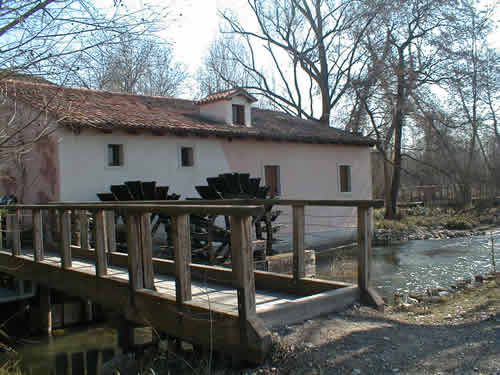 This milling complex which is located on the ancient route that connected Cordovado to the ancient Sestense abbey owes its name to the presence of stables (lat. Stabulis) in the area. These are two mills on the Lemene; the oldest is cited in documents from 1432, the most recent dates back to the end of the 19th century.
Since the fifteenth century, both the cereal mill and a timber saw and pestles for beating the linen fibers had been in operation inside; next to the building there were also some stables, as already mentioned, and a fish farm built between the canalizations.
From the seventeenth century onwards the property passed to the Tasca family from Portogruaro; a century later, wool fulling and barley husking were added to the existing activities. The current appearance has been modified compared to the original both due to the demolition of some buildings, the changes in the flow of the water, and the disappearance of some river islands. They worked until the 1970s, then they were decommissioned.
The mill today is home to a small exhibition of machinery dating back to the 1920s; furthermore, one of the wheels was recently put back into operation.
Also in this case we recommend a stop to enjoy the charm of the place; continuing with a few more pedals along the dirt road towards Cordovado, you then have the opportunity to visit the literary park of the Venchiaredo fountain, a famous place described by Ippolito Nievo in "The Confessions of an Italian". We recommend spring as the best time for this stage, to be able to appreciate the white flowering of various species of native shrubs in all its beauty.
Towards the ford - Versiola
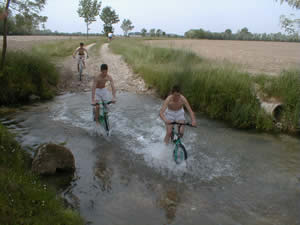 Given the interest of the places crossed, we focus in particular on the stretch of route that connects the Gruaro mill to the Stalis mills. The cycle path that starts from Via Piave, in the municipality of Sesto al Reghena, leads to the old ford of the Versiola canal, also mentioned in the oldest maps. The particularly low water level has in fact always allowed the passage of goods and animals at this particular point. Today it is still possible to cross the ford by bicycle; for those who don't want to experience the emotion, a small wooden bridge allows for easier passage.
Once you reach the other bank, the ancient thirteenth-century church of San Pietro appears among the trees on the left, in a particularly evocative landscape.
Gruaro mill
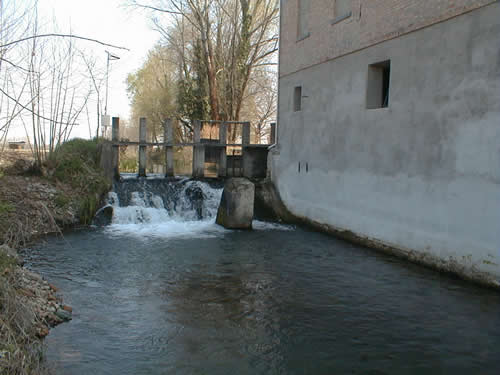 It is located on the Roggia Versiola, a tributary of the Lemene. It is mentioned in a document from 1344 as the property of a certain "Menego da Gruaro"; in 1683 we see it clearly represented in the map of the expert Francesco Cuman.
In the 18th century it belonged to the Terrani family. It ceased its activity in the 1970s; however it still retains part of the machinery inside; which testify both to the transition from a pre-industrial type of activity to a modern one, and therefore to the centuries-old continuity of milling activity in the area. The recently restored building houses a restaurant in the wing facing the street.
Boldara mill
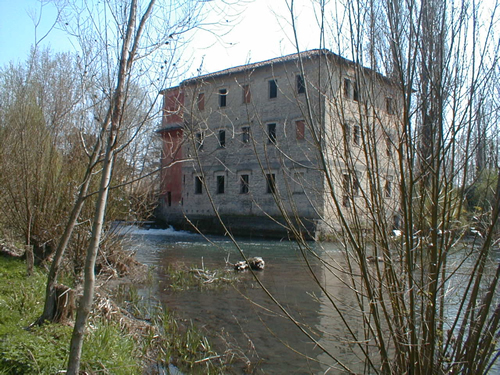 The Boldara mill stood in the middle of a swamp that extended between Boldara and Cintello on the waters of the Lemene or its derivations; it was located in the territory of the Sestensi abbots. Over the centuries, however, the mill complex changed owners many times. It is interesting to know that originally the mill was equipped with three wheels, a saw, and a grinder for beating woolen cloth. The main activities were therefore the grain mill, the wood sawmill and the beating of fabrics.
The current complex has undergone many reconstruction interventions that have brought it to its current appearance. In operation until the 1960s, it no longer used the original water jet.
The building, now unusable, is located in an area of great naturalistic interest, between the Lemene river and the Battiferro canal, renaturalised by local volunteers, who planted a large number of native trees, at the same time repopulating the waters with algae and aquatic plants. We strongly recommend that you park your bicycle and enjoy the walk along the banks, in a suggestive environment full of natural beauty.
Mills of Villa Bombarda - Portovecchio
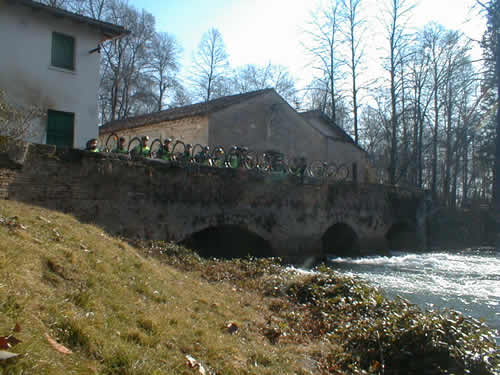 Villa Bombarda, immersed in the greenery of a beautiful park with the Lemene river running through it, and the mills on the banks, is located in the hamlet of Portovecchio. The villa complex dates back to 1600 and is located in a particularly evocative environment. The first documents attribute the property to the Venetian nobles Giustinian, and date back to 1661; around 1840 the villa and mills were purchased by the Bombarda family. It is now owned by the Furlanis family.
In the center you can see a two-story building with an elegant gable on the central part, now without a sundial.
The two mills exploited the natural flow of the river: the water was then channeled through a system of mobile bulkheads, partly visible even today. The millstones can still be seen leaning against the external wall of one of the buildings. It is interesting to note that inside one of the two mills a dynamo generator driven by the external paddle wheel is preserved: this system dates back to the early twentieth century and was the first supplier of electricity to the village of Portovecchio.
The beautiful park is also particularly pleasant, rich in tree species of various origins.
Mills of Sant'Andrea - Portogruaro
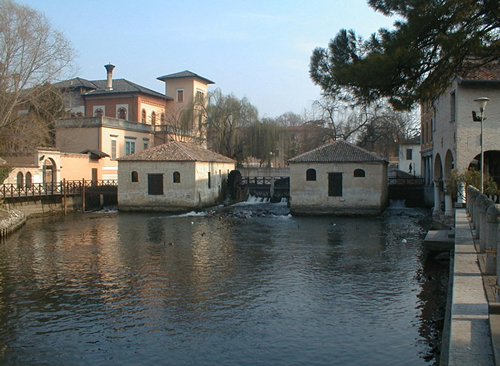 The mills date back to the century. XII; they were built by the bishops of Concordia and belonged to them until 1867. Even today, in fact, the coats of arms of the Bishops can be seen on the facades. In the 15th century they had ten wheels, testimony to the intense activity they carried out. On the opposite side of the entrances to the island you can still see the doors that give directly onto the Lemene river, once used for loading and unloading grain operations; this was done using a wooden pier that has now disappeared. In 1870 their ownership passed to various private individuals; However, the activity continued regularly until 1928 when the new owner, Consorzio di Bonifica di Lugugnana closed them. In 1970 they were purchased by the Municipality of Portogruaro and transformed into an art gallery. Of the ancient milling plants, only a few stone grinders remain visible in the space in front of the entrance; unfortunately the original paddle wheels have been completely lost.
Belfiore Mill - Pramaggiore
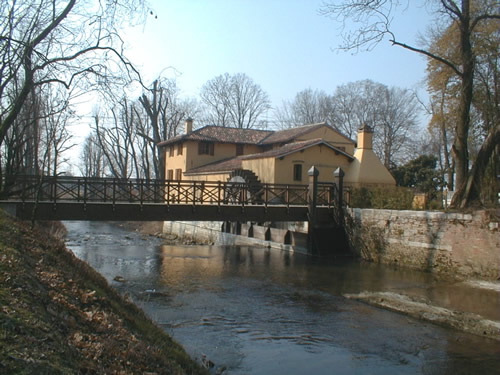 Of the many mills that once existed along the Loncon river, the one in Belfiore is the only one that has maintained its original characteristics. The documents that have come down to us date back to the second half of the 1400s, but it is very likely that the original structure dates back at least two centuries. The property passed from hand to hand over the centuries, until reaching the hands of the Della Pasqua family in 1800, who also owned the adjacent nineteenth-century villa. It is currently owned by the Municipality of Pramaggiore and has been the subject of careful restoration work. While the modern shovels are visible outside, inside a beautiful ethnographic museum has been set up which houses both the ancient millstones and the gears of a milling plant, and finally some evidence of peasant civilisation, from agricultural tools to some objects and furnishings for everyday use. Inside the museum, interesting workshops are organized for school pupils, who can thus experience firsthand some activities linked to the tradition of the mill.
La Sega Mill - Cinto Caomaggiore
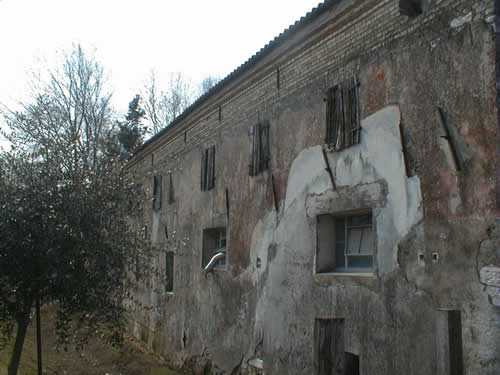 The name of the town itself refers to the ancient presence of a sawmill powered by the waters of the Reghena river. From medieval documents it emerges that, alongside this activity, there was space not only for a grain mill but also for a rice mill, a fuller for processing woolen cloth, a pestle for flax stalks and finally a sharpening wheel. Until the beginning of the last century, the mill constituted an important economic activity in the area, as well as a notable point of reference for the social life of the neighboring villages. The current building still fulfills its original function, even if its functioning no longer depends on the power of water. Noteworthy is the presence, at the entrance, of a beautiful entrance portal in Istrian stone, almost certainly recycled in past centuries from some important and ancient building in the area. Also worthy of mention is the old and imposing mulberry tree, whose age is almost four centuries, located near the entrance to the mill.
Map